
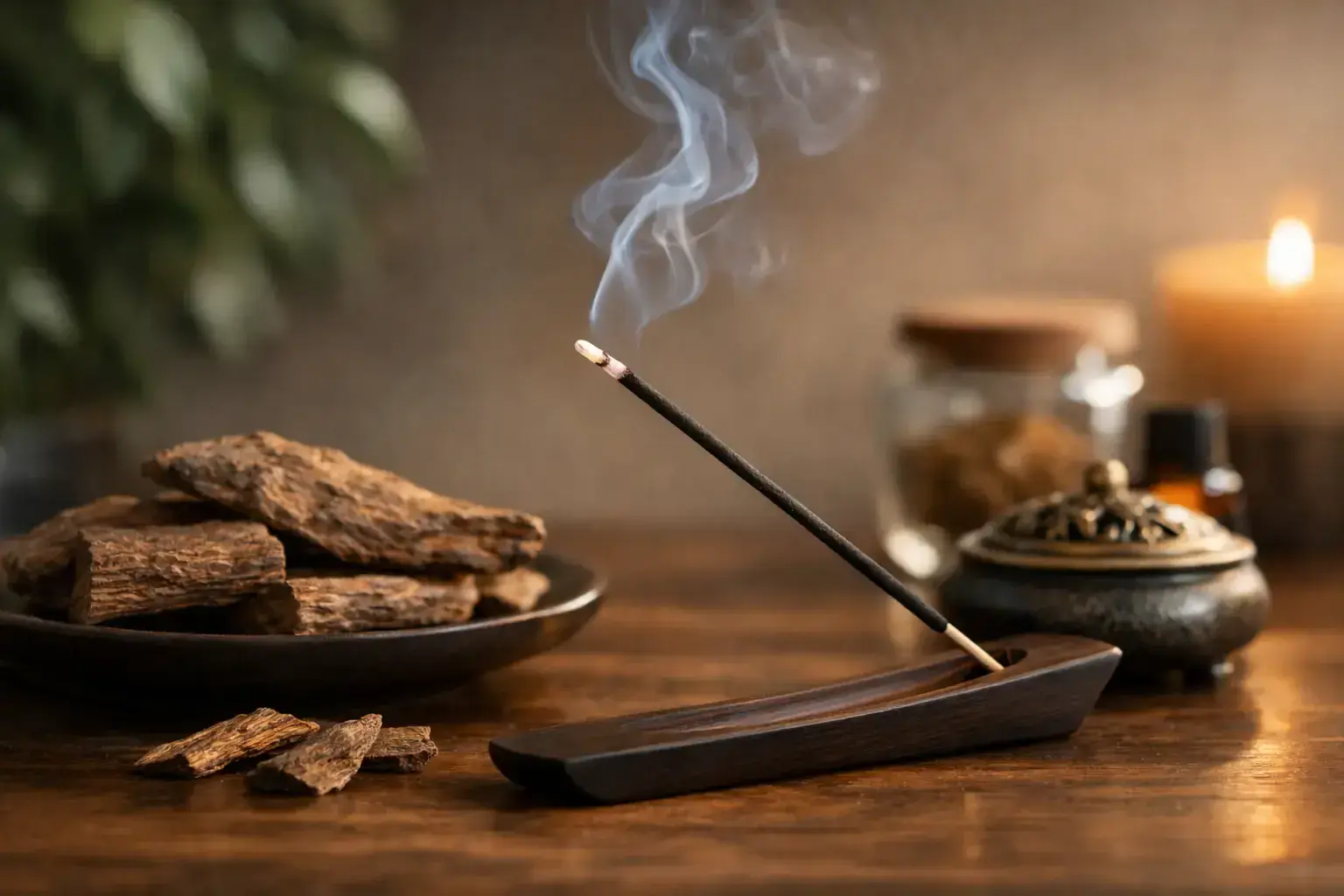
A single stick of agarwood incense can change the character of a room within minutes. It does not merely smell woody. At its best, it brings a dark, warm and finely layered fragrance: polished timber, soft resin, gentle sweetness and, sometimes, a faint medicinal or leathery depth. For many incense lovers, it is a scent to sit with rather than simply burn in the background.
Agarwood has been treasured across Asia, the Middle East and beyond for centuries. It appears in devotional settings, traditional perfumery and quiet domestic rituals, valued for an aroma that feels both grounding and mysterious. Yet the names around it can be confusing. Agarwood, aloeswood and oud are often used interchangeably, while the fragrance of an incense stick is shaped by far more than one aromatic material. Understanding the difference makes choosing a beautiful incense much easier.
What gives agarwood its distinctive aroma?
Agarwood comes from certain Aquilaria trees. When the wood develops a natural resin in response to environmental stress or infection, parts of it become darker, denser and fragrant. This resinous heartwood is the source of the aroma so admired in chips, oils, perfumes and incense.
The scent is difficult to reduce to one note because it varies enormously. The tree species, growing conditions, formation of resin and age of the wood all influence the result. Some agarwood is honeyed and balsamic, with an almost fruity softness. Other material is dry, earthy, smoky, peppery or deeply animalic. This complexity is one reason it has such a devoted following.
In everyday fragrance language, oud usually refers to agarwood or to an oud-inspired accord. In fine perfumery, oud may describe oil distilled from resinous wood, but it can also mean a crafted blend designed to evoke that dark woody profile. The same is true in incense. An agarwood incense stick may contain natural aromatic materials, traditional botanical ingredients and an oud-style fragrance composition. The name describes the intended fragrance character; it does not automatically mean that every stick contains a large amount of rare raw agarwood.
That distinction is not a disappointment. Traditional Indian incense making is an art of blending. Natural woods, gums, resins, herbs, floral materials, spices and essential oils can be balanced to create an aroma that burns evenly and remains expressive in the air. What matters is whether the finished incense has depth, harmony and a pleasing character when lit.
Agarwood incense and the Indian tradition
Indian incense has its own rich vocabulary and craftsmanship. A hand-rolled masala stick, for example, is often made by combining powdered botanical ingredients with a natural binding base, then rolling the mixture around a bamboo stick. Other styles are dipped or coated after the base stick is formed. Neither approach is automatically better - the fragrance, ingredients and skill of the maker determine the experience.
Agarwood-inspired Indian incense often places the dense woodiness of oud alongside sweeter and softer notes. Sandalwood may lend a creamy, smooth foundation; resins can bring warmth; saffron, rose or jasmine may provide a quiet lift. A trace of musk-like warmth can make the fragrance feel more rounded. The result is often more approachable than burning pure agarwood chips, whose aroma can be subtle, demanding and highly variable.
This makes agarwood incense especially appealing for the home. It offers the contemplative, resinous atmosphere associated with oud while remaining easy to enjoy in an ordinary living room, meditation space or hallway. A good stick should feel rich without becoming harsh, and lingering without making the room feel over-perfumed.
How does agarwood incense smell when burning?
Before lighting, an agarwood stick may smell sweet, woody or slightly sharp from the packet. Burning transforms it. Heat draws out the base notes and folds them into smoke, so the fragrance becomes warmer, drier and more spacious.
Expect a profile that may include dark wood, incense resin, soft spice, balsamic sweetness and a velvety, almost amber-like finish. Some blends lean bright and perfumed, with floral notes around the oud. Others are more austere: dry woods, temple resins and a touch of smoke. If you enjoy frankincense, sandalwood or traditional temple fragrances, agarwood is a natural next step. If your preference is for fresh citrus or light floral incense, choose a gentler oud blend rather than the darkest available option.
The room itself also matters. In a small study, a full stick of a powerful agarwood blend can feel intense. In a larger room with a little ventilation, the same incense may unfold beautifully. This is why experienced incense users often burn half a stick first, particularly when trying a new fragrance.
Choosing the right style for your space
For relaxation or evening use, look for an agarwood incense with a rounded, sweet-resinous character. Sandalwood, amber-like notes and soft florals can make oud feel calm and welcoming. These blends suit reading, a bath, gentle yoga or the quiet hour after dinner.
For meditation, prayer or a personal ritual, you may prefer a drier and more traditional fragrance. Earthy woods, frankincense-like resin and less overt sweetness can help create a focused atmosphere without demanding attention. The scent should support stillness, not compete with it.
For those already familiar with incense, a connoisseur-style agarwood can be rewarding. These are often less immediately sweet and more nuanced, revealing different woody, spicy and resinous facets as they burn. Give them time. A fragrance that seems restrained on first lighting may become the one you return to most often.
At Gokula Incense, the range of traditional Indian fragrances allows this sort of comparison: from gentler woody blends for daily home fragrance to fuller oud and agarwood profiles for those seeking a more contemplative scent.
Getting the best from agarwood incense
Agarwood incense benefits from a little restraint. Place the stick in a stable, heatproof holder, light the coated end, allow the flame to take hold for a few seconds, then gently blow it out. The tip should glow and release a thin stream of fragrant smoke, rather than a large flame.
Use it in a room where air can move naturally, but avoid a strong draught that sends the smoke straight out of the window. If the fragrance seems too heavy, burn less rather than abandoning the stick altogether. Snuffing the glowing tip in a little sand is a simple way to save the rest for another occasion.
It is also worth giving the aroma a little space. Avoid lighting a scented candle, using an oil diffuser or cooking strongly spiced food at the same time. Agarwood has enough complexity of its own. In a clear, quiet atmosphere, you are more likely to notice the transition from its opening sweetness to its warm woody dry-down.
As with all incense, burn it on a suitable holder away from curtains, pets, children and anything flammable. Never leave it unattended. Those with respiratory sensitivities may prefer to burn a shorter length in a well-ventilated room, or enjoy the unlit fragrance first.
A fragrance worth approaching slowly
The rarity and reputation of agarwood can encourage grand claims, but its real appeal is more personal. It is a fragrance that rewards attention. One person may find its resinous depth peaceful; another may be drawn to its sweetness, smoke or richly wooded character. There is no correct response and no need to reserve it only for formal spiritual practice.
Try burning it at the same time of day for several occasions, perhaps as evening light fades or before settling down to meditate. Let the fragrance become familiar enough for its quieter details to emerge. The finest agarwood incense does not fill every corner of a room with force; it creates a warm, aromatic presence that invites you to pause.
Explore Gokula's Agarwood Oud Incense Collection
If you would like to experience the rich, resinous character of agarwood incense for yourself, explore our carefully selected collection of agarwood and oud fragrances. From pure Vietnamese agarwood to beautifully blended creations combining agarwood with notes such as vanilla, sandalwood, musk and floral accords, our collection offers a variety of ways to discover this treasured fragrance.
Whether you are new to oud incense or already appreciate the depth and complexity of agarwood, you can explore our full range of premium agarwood incense sticks, cones and value packs below.
Explore our Agarwood Oud Incense Collection:
https://www.gokula-incense.co.uk/agarwood-oud-incense-43-c.asp
About Gokula
Gokula Incense has been exploring the world of natural and traditional Indian incense for over 30 years. Mark from Gokula has extensive personal experience with incense traditions, including time spent travelling in India, and a particular passion for authentic Indian incense and traditional temple fragrances.
Our collection brings together a wide variety of incense fragrances, from classic Indian favourites to distinctive Connoisseur, Ayurvedic, Oud and Primo blends, giving incense lovers the opportunity to discover fragrances that suit their own tastes and surroundings.